RAG vs Fine-Tuning vs AI Agents: How to Choose Your LLM Strategy in 2026
RAG, fine-tuning, or AI agents? A founder's decision guide to choosing your LLM strategy in 2026 — what each solves, what it costs, and the cheapest-first sequence to combine them.
The short answer: Use RAG when your model needs current or proprietary knowledge, use fine-tuning when it needs to reliably adopt a behaviour, format or voice, and reach for an AI agent only when a task genuinely requires multi-step reasoning and tool use. For most venture-backed teams in 2026 these are not rivals — the strongest architecture layers them, typically starting with a good prompt, adding retrieval for knowledge, and fine-tuning a small model only once you have evidence it pays for itself.
That distinction matters because the spending and the hype rarely line up. Around 88% of organisations now report using AI regularly, yet only 7% have scaled it enterprise-wide, and Gartner expects more than 40% of agentic AI projects to be cancelled by the end of 2027 on the back of unclear value and escalating costs. The founders who win are the ones who match the technique to the problem — not the ones who buy the most sophisticated-sounding option.
The short version: three tools, three jobs
RAG, fine-tuning and agents answer three different questions. RAG answers "what does the model know?" Fine-tuning answers "how does the model behave?" Agents answer "what can the model do on its own?" Get that mapping right and most of your architecture decisions make themselves.
| Approach | Problem it solves | Best when | Watch out for |
|---|---|---|---|
| RAG | Knowledge — giving the model facts it doesn't hold | Answers depend on your documents, prices or policies that change over time | Retrieval quality; garbage in, garbage out |
| Fine-tuning | Behaviour — a consistent style, format or narrow skill | You can show hundreds of good examples but can't easily describe the rule | Cost and staleness; the model won't learn new facts this way |
| AI agents | Action — planning and using tools across multiple steps | A task needs decisions, tool calls and iteration, not a single answer | Reliability, cost and safety in production |
What is RAG, and when does it win?
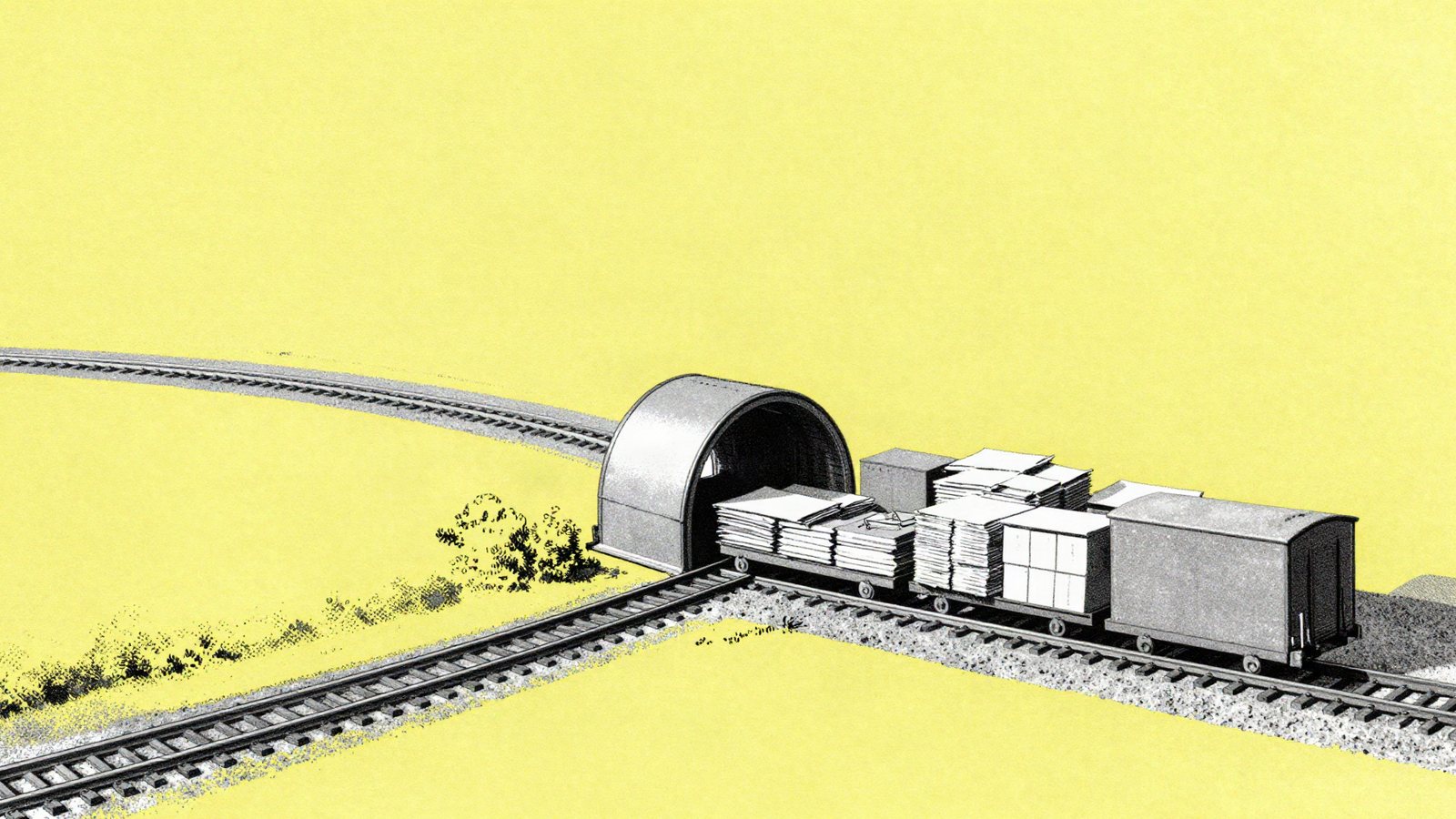
RAG wins whenever the problem is knowledge rather than behaviour. Retrieval-augmented generation embeds your query, fetches the most relevant chunks from a knowledge store, and injects them into the prompt before the model answers — so the model can cite current, authoritative sources without any retraining.
The payoff is accuracy on facts. Independent comparisons show RAG improving factual correctness by 4–16% on knowledge-intensive tasks, and well-built retrieval can cut hallucination rates by more than 40% against a comparable baseline. If your users need answers grounded in internal documentation, product specs or anything that updates weekly, RAG is almost always the first thing to build.
It isn't free, though. A production RAG system serving meaningful traffic typically runs $4,000–$9,000 per month, on top of a one-time build of roughly $25,000–$80,000 for vector storage, embeddings, inference and observability. For most early-stage products that is money well spent, because the alternative — a confidently wrong assistant — quietly erodes trust with the exact customers you're trying to win.
When is fine-tuning actually justified?
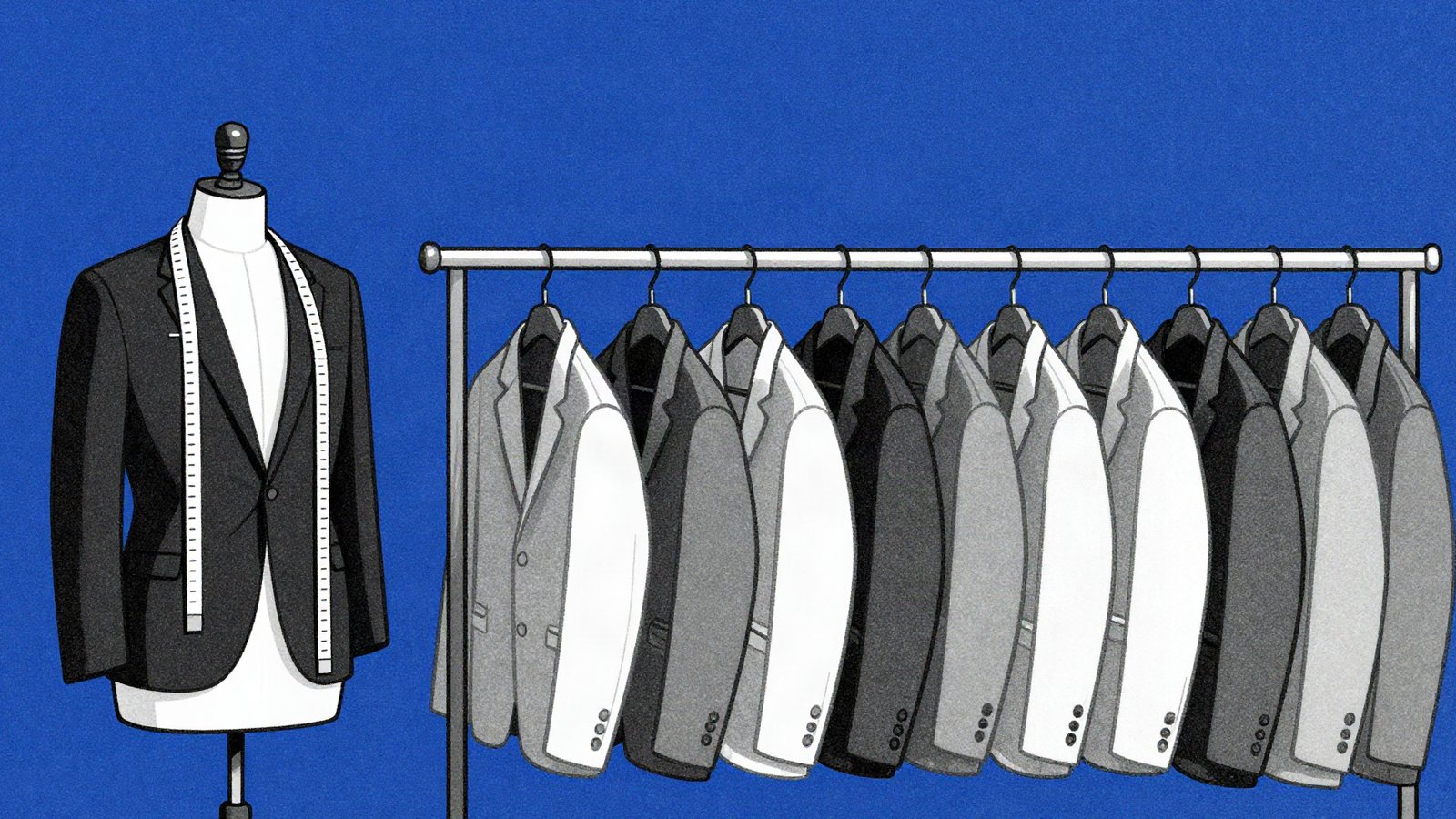
Fine-tuning is justified when you need behaviour, not knowledge. If you want a consistent tone, a strict output format, or a narrow skill that is hard to describe but easy to demonstrate with examples, fine-tuning bakes that pattern into the model's weights so you stop paying for it in every prompt.
The economics have shifted decisively towards lightweight methods. Parameter-efficient techniques such as LoRA and QLoRA now deliver 90%+ of full fine-tuning's performance at a fraction of the price — roughly $2,000–$20,000 per project versus $50,000 or more for a full retrain. That is why the pragmatic 2026 pattern is a thin LoRA adapter on a strong base model, paired with retrieval rather than replacing it.
The trap is reaching for fine-tuning to teach the model facts. It won't reliably learn them, it will drift out of date the moment your data changes, and you'll have spent weeks solving a problem RAG handles in days. Fine-tune for how the model should respond; retrieve for what it should know.
Do you actually need an AI agent?
Usually later than the market implies. An AI agent — a model that plans, calls tools and iterates towards a goal with limited supervision — is the right tool only when a task genuinely spans multiple steps and decisions. For a single question with a single answer, an agent is expensive over-engineering.
The adoption data tells the story. Gartner expects 33% of enterprise software applications to include agentic AI by 2028, up from less than 1% in 2024 — real momentum, but a long runway. Today the picture is more sober: McKinsey finds 23% of organisations are scaling an agentic system somewhere, but no more than 10% are doing so within any single business function. The gap between experiment and production is where budgets go to die.
Our honest advice to founders: earn your way to agents. If you can't yet trust a model to answer a scoped question reliably, you certainly can't trust it to take actions on your behalf. Prove reliability on retrieval and generation first, add strong evals and guardrails, then extend into agentic workflows where the multi-step complexity clearly justifies the risk. If you're weighing an agent build, our note on agent-first development tooling is a useful companion.
The 2026 decision sequence founders should follow
Treat this as a sequence of cheapest-first experiments, not a single big bet. Each step either solves the problem or tells you exactly what the next one needs to fix — and importantly, these techniques are layers, not a ladder you climb and abandon.
- Start with the prompt. It costs hours, not weeks. A surprising share of "we need fine-tuning" problems are really "we need a better prompt and clearer instructions".
- Add RAG for knowledge gaps. The moment answers depend on your data or anything that changes, wire in retrieval.
- Fine-tune for behaviour. Once you have real usage and clear patterns the prompt can't hold, train a small LoRA adapter for format, tone or a narrow skill.
- Reach for agents last. When a workflow genuinely needs planning and tools, and only after evals prove your foundation is reliable.
Layering wins because the parts reinforce each other. Hybrid setups that combine a lightly fine-tuned model with retrieval have delivered around 22% higher accuracy than standalone methods while keeping compute costs roughly 40% lower — the kind of efficiency that matters when you're spending investor money to reach a milestone.
What does an LLM strategy cost in 2026?
Cost should shape the order you try things, and it broadly tracks effort: prompting is near-free, retrieval is a monthly operating cost, and fine-tuning is a project. The table below is a planning-grade summary, not a quote — your numbers will move with traffic and scope.
| Approach | Typical cost | Time to value | Changes when your data changes? |
|---|---|---|---|
| Prompt engineering | Effectively free | Hours to days | Yes — instantly |
| RAG | ~$25K–$80K build; $4K–$9K/month | Days to weeks | Yes — re-index and go |
| Fine-tuning (LoRA/QLoRA) | ~$2K–$20K per project | Weeks | No — needs retraining |
| AI agents | Highest; variable ongoing | Weeks to months | Depends on tools and design |
If you're pricing a broader build, our breakdown of what it costs to build an AI MVP in 2026 puts these components in the context of a full product budget.
Frequently asked questions
Is RAG or fine-tuning better for a startup?
For most startups, RAG first. It solves the more common problem — grounding answers in your data — faster and more cheaply, and it stays current as your content changes. Fine-tune later, and only for behaviour the prompt and retrieval can't deliver.
Can I use RAG and fine-tuning together?
Yes, and increasingly you should. The leading 2026 pattern is a small fine-tuned model for voice and format sitting on top of a RAG layer for knowledge, which has shown materially higher accuracy at lower compute cost than either approach alone.
Do I need an AI agent at all?
Only if your task requires multiple steps, decisions and tool use. Given that more than 40% of agentic projects are forecast to be cancelled by 2027, prove reliability on simpler foundations before you commit.
How much should an early-stage team budget?
Expect prompting to be near-free, a production RAG system to run a few thousand pounds a month, and a focused LoRA fine-tune to sit in the low tens of thousands. Sequence the spend so each step earns the next.
Where UZO fits
We help venture-backed, deep-tech founders choose and build the right LLM architecture — RAG, fine-tuning, agents, or the pragmatic blend of all three. If you'd rather pressure-test the decision before committing budget, an AI Prototyping & R&D Sprint (from £500/day or £2,000/week) turns the question into a working prototype in days, and our Growth retainers (from £5,000/month) take it to production. Book a free 30-minute workshop and we'll map the cheapest sequence to your specific problem — no hype, just the honest trade-offs.
Sources: McKinsey, The State of AI 2025; Gartner, agentic AI forecast; Stratagem Systems, RAG implementation cost; Canopywave, LoRA vs RAG; Aakash Gupta, RAG vs fine-tuning vs prompt engineering; BigData Boutique, fine-tuning when RAG isn't enough; MEGA-RAG (PMC); The New Stack, why it's not a ladder.